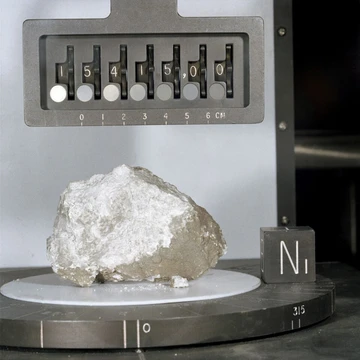
Mars sample-return mission
Bringing Mars to Earth: the ultimate sample return challenge.

Wikipedia / Wikimedia Commons
The Mars Sample Return (MSR) mission is a proposed joint campaign by NASA and ESA to collect rock and soil samples from the Martian surface and deliver them to Earth for laboratory analysis. As of early 2025, the mission had not received formal approval from either agency, and no cancellation had occurred, leaving its future dependent on ongoing feasibility studies and budget decisions.
- Lead Agencies
- NASA (USA) and ESA (Europe)
- Primary Goal
- Return ~30 sealed sample tubes from Jezero Crater to Earth
- Key Components
- Sample Retrieval Lander, Mars Ascent Vehicle, Earth Return Orbiter
- Sample Collection
- Perseverance rover (landed 2021) has cached samples
- Estimated Cost
- Up to $11 billion (2024 NASA estimate)
- Planned Launch Window
- No earlier than late 2020s (as of early 2025)
- Current Status
- Pre-Phase A; awaiting formal approval
Lore & Background
The Mars Sample Return concept dates back to the 1970s, but serious planning began after NASA's Mars 2020 mission (Perseverance) successfully cached over 30 rock and regolith samples in Jezero Crater. The mission architecture involves three stages: a lander to retrieve the samples, a small rocket (Mars Ascent Vehicle) to launch them into orbit, and an ESA-built orbiter to capture the container and return it to Earth. The samples would be the first pristine Martian material ever brought back, potentially revealing evidence of ancient life and planetary history.
Reader's Guide
Mars sample-return missions represent a long-sought goal in planetary science, enabling analysis of Martian material with the most sophisticated instruments on Earth. The scientific value is high: in 2008, the Mars Exploration Program Analysis Group concluded that about half of 55 important investigations could be addressed by MSR, making it the single mission that would make the most progress. A significant fraction of investigations could not be meaningfully advanced without returned samples. Despite decades of proposals and studies, no MSR mission has yet been completed. The NASA-ESA Mars Sample Return was cancelled in 2026, while China's Tianwen-3 and Russia's Mars-Grunt remain planned. The effort has driven innovation in Mars ascent vehicle design, with concepts ranging from 100-kg to 2.7-ton vehicles, and has involved international collaboration through groups like iMARS. The legacy of MSR concepts continues to influence Mars exploration strategy.
Did You Know?
- The Perseverance rover has already deposited a backup sample cache at Three Forks, a designated drop site in Jezero Crater.
- The Mars Ascent Vehicle would be the first rocket ever launched from another planet's surface.
- Sample tubes are designed to be sterilized and sealed to prevent Earth contamination and preserve Martian biosignatures.
- A 2024 independent review recommended a simplified, lower-cost architecture to reduce mission risk and cost.
Mission Architecture: Two Decades of Redesign
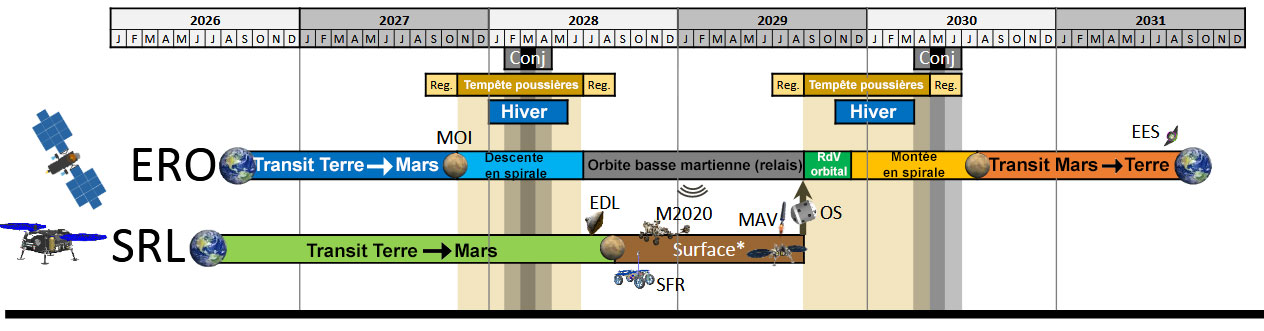
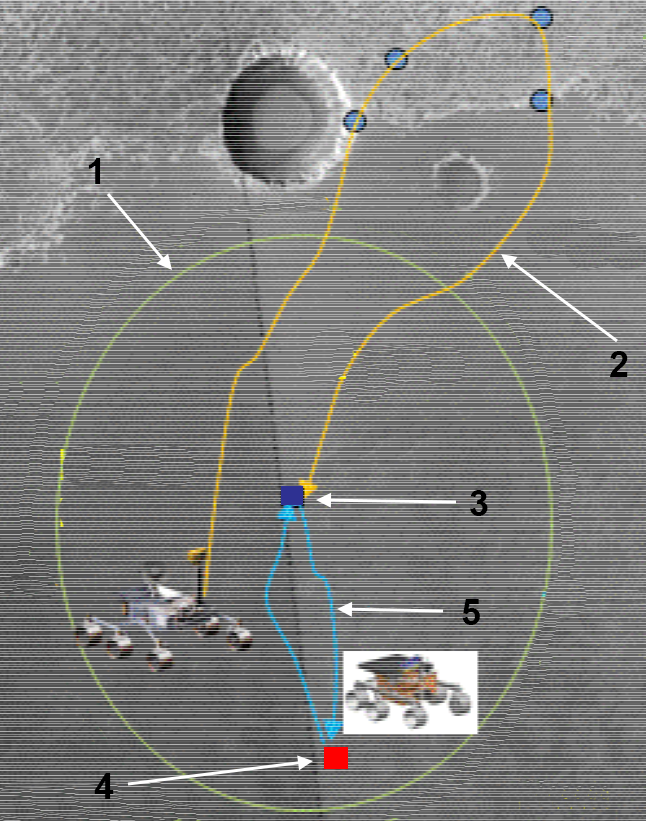
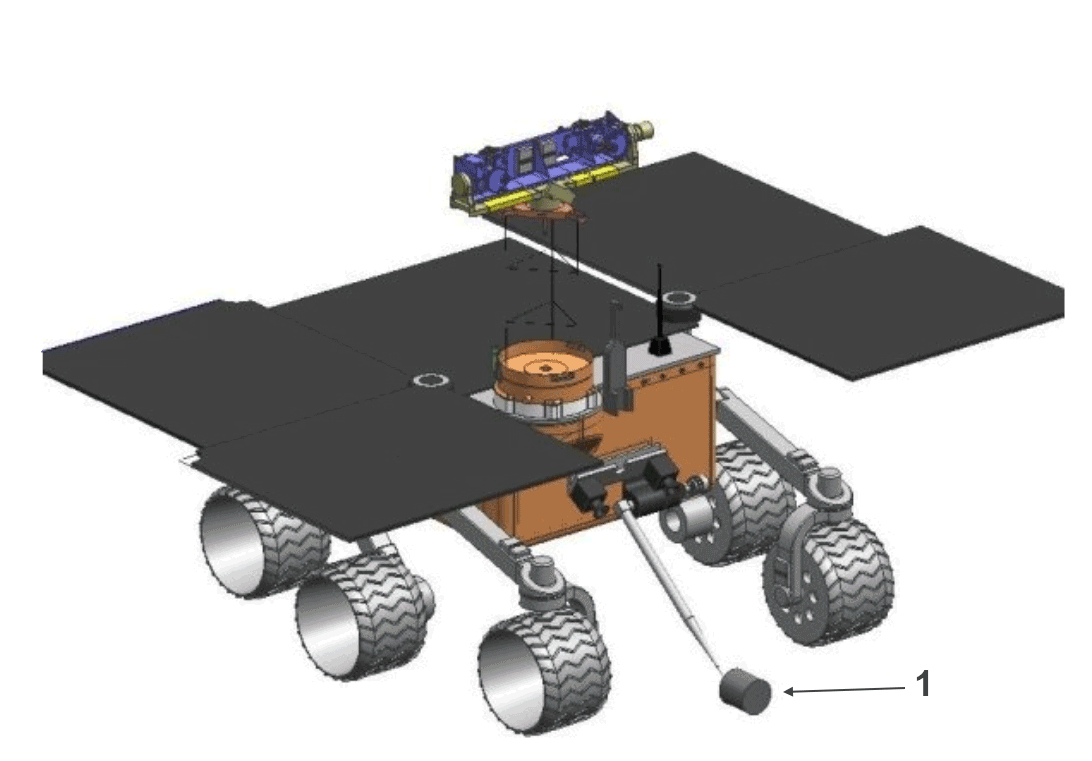
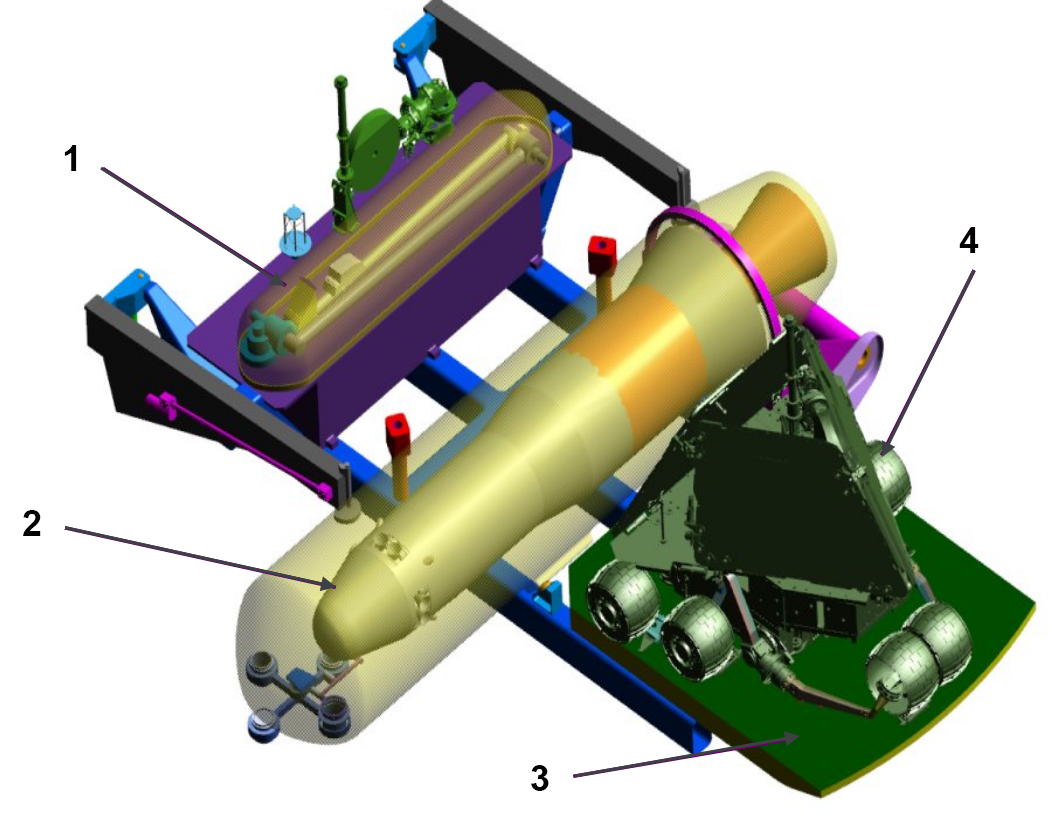
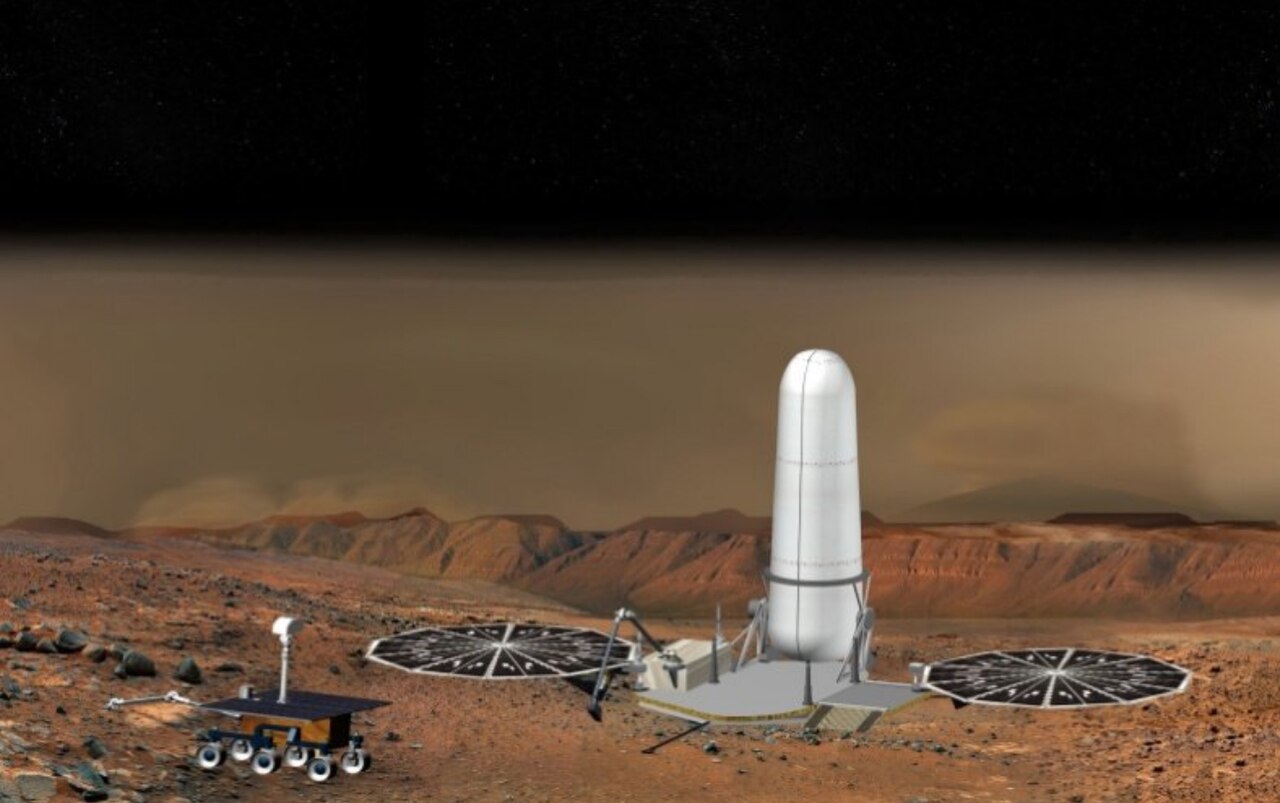
The Mars Sample Return concept underwent significant architectural shifts over more than two decades. Early 2001 proposals solicited from Boeing, Lockheed Martin, and TRW envisioned a rover capable of traveling at least one kilometer from its landing site and drilling two meters deep to collect a minimum of 500 grams of material. By 2003, JPL deemed those concepts too expensive and pivoted to a simpler approach: a lander-mounted scoop digging 20 centimeters into the surface, consolidating samples into a single container. The success of Spirit and Opportunity in early 2004 prompted a return to rover-based collection, and by 2005 a rock core drill was back in the plan. The final NASA-ESA architecture, approved in September 2022, settled on a three-mission sequence: Perseverance collecting 43 small cylindrical titanium tubes of rock and soil, a Sample Retrieval Lander paired with a Mars Ascent Vehicle and two Ingenuity-class helicopters for recovery, and an Earth Return Orbiter to bring the sealed samples home around 2033.
The Ascent Vehicle: A First-of-Its-Kind Technical Hurdle
The Mars Ascent Vehicle represented the single most technically fraught element of the entire sample-return endeavor. Lockheed Martin's 2001 analysis characterized the risk of mission failure as "extremely high" if launch components were tested only in isolation rather than as an integrated system, arguing for high-altitude flight tests over Earth before any Mars deployment. The propulsion choice itself became a subject of peer-reviewed debate: solid rocket motors burn rapidly, forcing a steeper ascent trajectory to minimize atmospheric drag, while slower-burning liquid engines could exploit more efficient orbital insertion paths. A 2006 Marshall Space Flight Center design called for a two-stage, 250-kilogram solid-propellant rocket gas-ejected from a launch tube, carrying a 5-kilogram payload that included a 16-centimeter spherical sample package. By 2008, analysts drew parallels to lunar ascent but warned the MAV posed a cultural challenge for the planetary science community as well, representing a first-of-its-kind operation with no direct precedent in the field.
From Approval to Cancellation: The Political and Financial Arc
The mission's final chapter was defined by escalating budget pressures and shifting political will. After receiving formal approval in September 2022, the project survived barely a year before a critical review flagged its cost and complexity, prompting NASA to announce a "pause" on November 13, 2023. Within a week, reports indicated the freeze was driven by a possible funding shortfall. The $11 billion price tag was ultimately judged infeasible, and NASA directed industry partners and the Jet Propulsion Laboratory to develop a leaner mission profile. In April 2024, the NASA Administrator publicly reaffirmed the agency's commitment to retrieving the samples during a teleconference update, yet the underlying financial reality had not changed. The project's fate was sealed in January 2026, when Congress confirmed the Trump administration's decision to cancel the program entirely, leaving Perseverance's carefully sealed tubes stranded on the Martian surface.
Scientific Ambition and the Contamination Problem
At its core, the Mars Sample Return program was designed to answer one of planetary science's most consequential questions: whether Mars once supported life. The science requirements demanded not just quantity—a minimum of 500 grams of collected material—but also diversity, with samples gathered from varying depths and locations to give Earth-based laboratories a rich dataset. Equally critical was the dual contamination problem. Technology development was initiated to ensure that any potential Martian microorganisms would not be transported to Earth, while simultaneously guaranteeing that the samples themselves would not be tainted by terrestrial biological material. The design called for the sample container to be externally clean before departure, with installation onto the ascent vehicle performed inside a dedicated "Earth-clean MAV garage." The involvement of both a new MSR Science Steering Group and the Mars Exploration Program Analysis Group in validating the 2003 plan underscored how deeply the scientific community was invested in getting the collection methodology right.
Gallery

Frequently Asked Questions
What exactly is a Mars sample-return mission?
It is a planned robotic effort to collect rocks and dust from the Martian surface and physically transport them back to Earth for laboratory analysis. The idea goes back to before 1990, when it was first floated during the Apollo program era.
Why do scientists want to bring Mars samples home instead of just studying them in place?
Instruments aboard a rover or lander can only run a limited set of tests, whereas a full laboratory on Earth can perform far more sensitive and varied analyses. The central question driving every MSR concept is whether Mars ever harbored life.
What happened to the NASA-ESA Mars Sample Return program?
The joint NASA-ESA MSR architecture, which had been in development for years, was officially cancelled in 2026. Despite that setback, the broader goal of returning Martian material remains a priority for several space agencies.
Which missions are currently on the books to actually return Martian samples?
China's Tianwen-3 is targeting a December 2028–January 2029 launch window using two robotic launches, while Russia's Roscosmos has outlined a Mars-Grunt mission for the 2030s. JAXA has also put forward its own proposal, and the key agencies involved span NASA, ESA, CNSA, Roscosmos, and JAXA.
Could bringing Martian rocks back to Earth contaminate our biosphere?
Some members of the public and even a few scientists have raised back-contamination concerns, but the prevailing expert assessment is that the risk is very low. Standard planetary-protection containment protocols are designed to keep any returned material isolated from the environment.
More in Sample return missions 1-24
Spotted an error? Know more?
This is a living reference — every entry is fact-audited, and reader corrections feed straight into our audit queue. Suggest an edit · See this site's audit record