Frequently Asked Questions
The most-asked questions about sample return missions.
What exactly is a sample return mission?
It is a spaceflight designed to collect material from another celestial body and physically bring it back to Earth for laboratory study. Unlike robotic probes that analyze samples in place, these missions deliver actual rocks, soil, or ice to scientists who can apply far more sophisticated instruments.
Which agencies and missions are the big names in sample return history?
NASA's Apollo program (1969–1972) and the Soviet Luna program (1970–1976) are the most famous, having returned lunar material. More recently, JAXA's Hayabusa (2010) and Hayabusa2 (2020) brought back asteroid regolith, and NASA's OSIRIS-REx delivered asteroid Bennu samples in 2024.
How much sample material has actually been brought back to Earth?
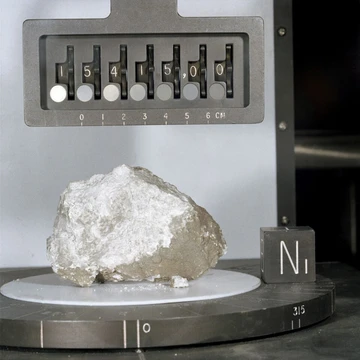
Apollo returned roughly 382 kg of lunar rocks and soil, while the Luna program collected about 326 g. In contrast, Hayabusa brought back about 1.5 g of asteroid Itokawa material, Hayabusa2 returned around 5.4 g from Ryugu, and OSIRIS-REx delivered over 125 g from Bennu.
What's the difference between sample return and in-situ analysis?
In-situ analysis means a lander or rover measures composition, temperature, or other properties where the sample sits, while sample return ships the material to Earth. The advantage of returning samples is that scientists can apply new techniques decades later as technology advances, something impossible once a probe's mission ends.
Where should a newcomer start if they want to learn about sample return missions?
A good entry point is reading NASA's Apollo sample curation pages or the JAXA Hayabusa mission summaries, both freely available online. From there, popular-science books on planetary geology and the OSIRIS-REx mission blog give a sense of the excitement and science behind each return.
What is the 'quarantine' or planetary-protection concern with sample return?
Planetary-protection protocols require that returned samples be handled in sealed, clean facilities to prevent any hypothetical extraterrestrial microorganisms from contaminating Earth's biosphere. The same rules also protect the samples themselves from terrestrial contamination so their original chemistry remains intact for study.
What are some of the most notable 'firsts' in sample return history?
Apollo 11 in July 1969 was the first crewed mission to bring alien material back, and Luna 16 in 1970 was the first fully robotic sample return. Hayabusa in 2010 was the first mission to return material from an asteroid, and OSIRIS-REx in 2024 was the first to deliver a sample from a near-Earth asteroid to a desert landing site.
Why do scientists care so much about a few grams of asteroid dust?
Asteroid regolith is believed to preserve nearly pristine pre-solar-system chemistry, including amino acids and organic compounds that may predate life on Earth. Studying these grains helps researchers understand how the building blocks of life were delivered to the inner planets.
What is the status of the Mars sample-return effort?
NASA and ESA have a multi-launch architecture in which Perseverance (landed 2021) caches rock cores in sealed tubes, a future NASA lander retrieves them, and an ESA-built Earth Return Orbiter ships them home. The program has faced repeated budget and schedule reviews, and as of the mid-2020s its timeline remains under negotiation between the two agencies.
How are returned samples actually stored and who gets to study them?
Samples are kept in dedicated curation facilities—such as NASA's Lunar Sample Laboratory at JSC or JAXA's curation center in Japan—under inert-gas atmospheres. Researchers apply for access through competitive review panels, and every gram handled is logged so the material can be re-studied for generations.